












 Buenos Aires · Argentina
WONE Global Partner · Argentina
Sourced guides to doing business in each market, and the status of every service there. Partners are in place in 38 markets so far.
One WONE Global Partner for each service in each market. Start from what you need to do, or go straight to a service.
Describe what you need. WONE Global names the service and the professional before any work begins.
Bring a requirement →Licences, value chains and the questions businesses in each industry ask first, with the services that usually apply.
What one country changes for the other, worked journeys step by step, and who handles each side.
When cross-border business becomes a dispute, UNIONE™, also part of the UNBOUNDED™ Global Ecosystem, prevents it, resolves it, arbitrates it and plans enforcement. 334 Fellows in 58 countries.
41 jurisdictions, each with primary sources and the date last checked.
Named senior professionals, each admitted as the one firm for a service in their country, and the firms they lead.
One Partner per service, per jurisdiction, admitted by review against published criteria.
Every statement is labelled: source-checked, professionally reviewed or not yet checked, with its source and date where checked.
Answers cite WONE Global's sourced statements and show how each one was checked. Research, not advice.
Accomplished regional specialists and international cross-border intelligence, across 100 countries, with one contact and one published Standard.
Industries · Private Capital & Family Business
What a business in holding companies usually needs to sort out when it works in more than one country, and who at WONE Global handles it.
Typical issues
General orientation, not advice. How each applies depends on your markets — your WONE Global professional confirms it.
Services
Industry experience
If no professional is listed for your market, WONE Global arranges qualified local expertise and names them before work begins.
Buenos Aires · ArgentinaWONE Global Partner · Argentina
 Jeddah · Saudi Arabia
WONE Global Partner · Saudi Arabia
 Vienna · Austria
WONE Global Partner · Austria
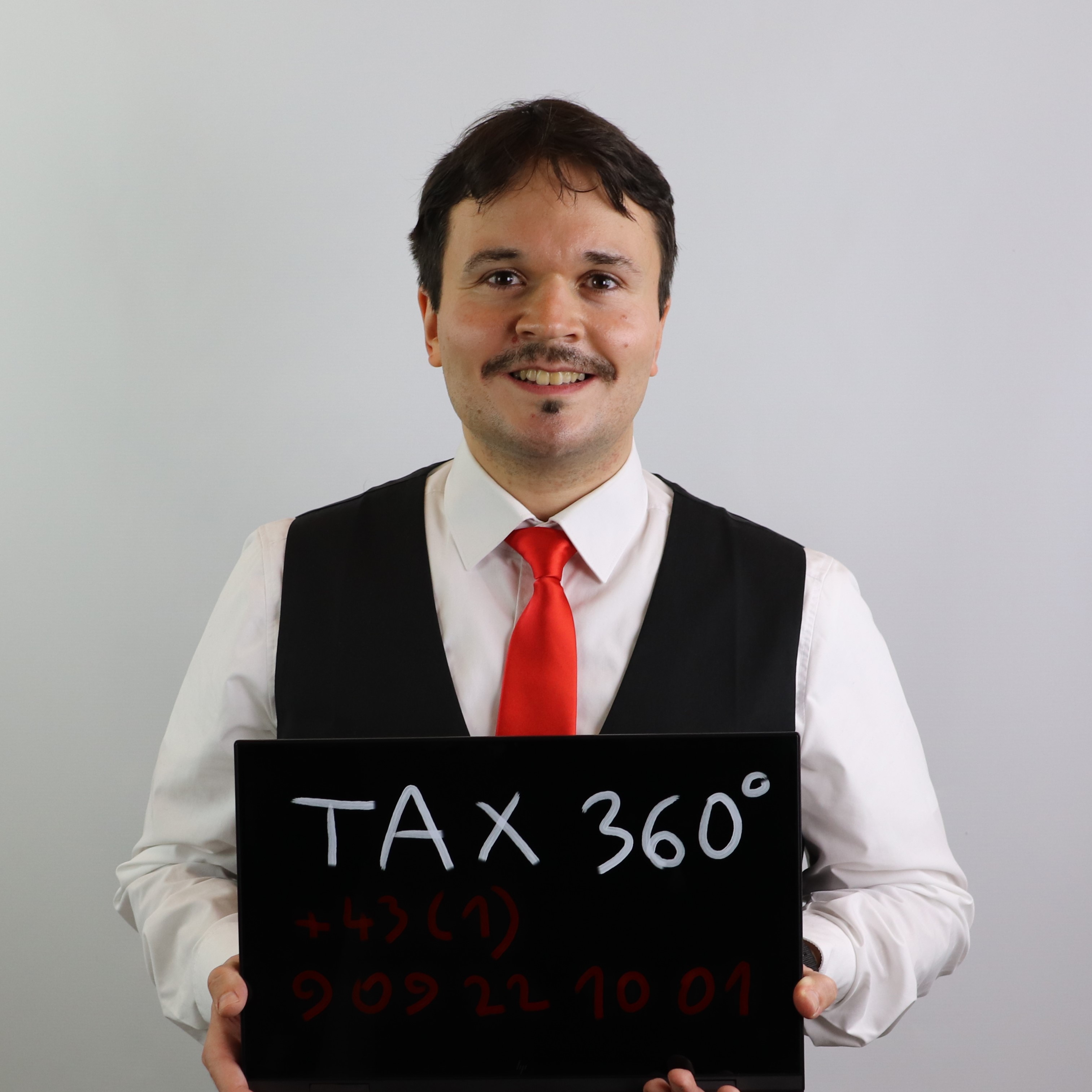 Vienna · Austria
WONE Global Partner · Austria
Simic Denis MSc., LL.B. studied business administration in Vienna. After completing his studies, he specialized in accounting and tax compliance, qualifying as a certified Austrian accountant. In 2022, he joined TAX 360…
Also in Private Capital & Family Business
What the guides say · Investment & Transactions
Deals and investment is usually the first thing holding companies businesses check. Choose a market to see its rules.
| South AfricaEssentials · source-checked | Mergers above the intermediate threshold must be notified to the Competition Commission, and the thresholds rose on 1 May 2026. Takeover rules apply to public and certain private companies. |
|---|---|
| EgyptEssentials · source-checked | Only the tax treatment of share disposals could be confirmed. Merger control, takeover rules and insolvency need to be checked from official sources. |
| KenyaEssentials · source-checked | Acquisitions of control of listed companies follow the Capital Markets (Take-Overs and Mergers) Regulations, and insolvency is governed by the Insolvency Act 2015. |
| NigeriaEssentials · source-checked | Notifiable mergers must be approved by the FCCPC before implementation, and offshore deals can be caught where the parties sell into Nigeria. Corporate capital gains are taxed at 30 percent. |
| AustraliaEssentials · source-checked | Foreign acquirers may also need FIRB approval, and takeovers of listed and larger companies follow federal takeover rules. Insolvency is federal and offers administration, liquidation and a small business restructuring process. |
|---|
| PolandEssentials · source-checked | Deals meeting UOKiK turnover thresholds need clearance before closing, with fines for gun-jumping. Poland may also screen foreign investment under the EU framework, but the national rules were not confirmed here. |
|---|
| ChinaEssentials · source-checked | Mergers meeting turnover thresholds must be notified to SAMR before closing under the Anti-Monopoly Law, amended in 2022. Thresholds were raised in January 2024. |
|---|---|
| JapanEssentials · source-checked | Share acquisitions meeting domestic turnover tests of JPY 20 billion for the acquirer group and JPY 5 billion for the target must be notified to the Japan Fair Trade Commission, with a 30-day waiting period. |
| South KoreaEssentials · source-checked | The Korea Fair Trade Commission reviews mergers where one party has KRW 300 billion and the other KRW 30 billion of assets or sales, with share thresholds of 20 or 15 percent. Review takes 30 days, extendable by up to 90. |
| United Arab EmiratesFull guide | Deals that cross the federal merger control thresholds (UAE turnover above AED 300 million in the relevant market, or a combined share above 40%) must be notified to the Ministry of Economy and Tourism at least 90 days before completion… |
|---|---|
| Saudi ArabiaFull guide | Acquisitions in Saudi Arabia can need merger clearance from the General Authority for Competition (GAC), registration or approval from the Ministry of Investment (MISA) and, for listed targets, compliance with the Capital Market… |
| QatarEssentials · source-checked | Competition law requires notification of certain acquisitions and mergers to the competition authority at the Ministry of Commerce and Industry. Listed company transactions are regulated by the Qatar Financial Markets Authority. |
| BahrainEssentials · source-checked | Takeovers of listed companies are regulated by the Central Bank of Bahrain. A 2018 bankruptcy law introduced a reorganisation procedure modelled on debtor-in-possession restructuring. |
| OmanEssentials · partly source-checked | Oman's competition law requires approval of economic concentrations that may lead to dominance. Listed company transactions are regulated by the Financial Services Authority, with shares traded on the Muscat Stock Exchange. |
| BrazilEssentials · source-checked | Deals above turnover thresholds must be cleared by CADE before closing. Early completion is penalised with fines and nullity. CADE's review period is capped at 240 days, extendable by 90. |
|---|---|
| ChileEssentials · source-checked | Listed company deals fall under the securities law and the CMF. Insolvency is handled under a 2014 law providing for reorganisation and liquidation procedures. |
| ColombiaEssentials · source-checked | Insolvency is governed by Law 1116 of 2006 and handled mainly by the Superintendencia de Sociedades. Listed company deals fall under Superintendencia Financiera rules. |
| SwedenEssentials · partly source-checked | Distressed businesses can use bankruptcy or company reconstruction proceedings. |
|---|---|
| NorwayEssentials · source-checked | Concentrations with combined Norwegian turnover above NOK 1 billion must be notified to the Norwegian Competition Authority unless only one party has Norwegian turnover above NOK 100 million. |
| United StatesFull guide | Deals in the United States are shaped by three federal filters: Hart-Scott-Rodino merger notification to the FTC and DOJ, national security review by CFIUS for foreign buyers, and, for US investors going outward, Treasury's outbound… |
|---|---|
| CanadaEssentials · source-checked | Large mergers must be notified to the Competition Bureau and cannot close during a 30-day waiting period, while acquisitions of control by non-Canadians fall under the Investment Canada Act. |
| MexicoEssentials · source-checked | Merger control and antitrust enforcement now sit with the Comisión Nacional Antimonopolio under the reformed Federal Economic Competition Law. |
| IndiaFull guide | Acquisitions, mergers and amalgamations that cross the asset or turnover thresholds in the Competition Act 2002, or that are worth more than Rs 2,000 crore where the target has substantial business operations in India, must be approved by… |
|---|---|
| BangladeshEssentials · source-checked | The Competition Act 2012 established the Bangladesh Competition Commission and allows it to review combinations that may harm competition. Listed company takeovers follow BSEC rules. |
| BhutanEssentials · source-checked | Acquisitions involving a Bhutanese business can require corporate, FDI, sector and licensing approvals. Investment eligibility and ownership limits should be retested for the buyer and post-closing structure. |
| SingaporeFull guide | Singapore has no general foreign-investment approval for acquisitions, but stakes in entities designated under the Significant Investments Review Act 2024 need notification or prior approval, and regulated sectors have their own… |
|---|---|
| MalaysiaEssentials · source-checked | The 2024 amendments to the Companies Act 2016 strengthened Malaysia's corporate rescue tools, including wider access to voluntary arrangements, moratoria for schemes and super-priority rescue financing. |
| VietnamEssentials · source-checked | Foreign acquisitions must meet market access conditions and, in defined cases, be registered before the change of shareholders, including where foreign ownership would exceed 50%. Merger control and insolvency rules still need confirmation. |
| IndonesiaEssentials · partly source-checked | Acquisitions of listed companies follow OJK takeover rules, and insolvency is handled by the Commercial Courts through bankruptcy or suspension of payment proceedings. |
| ThailandEssentials · source-checked | Mergers are controlled under the Trade Competition Act B.E. Takeovers of listed companies follow SEC tender offer rules, and insolvency is handled under the Bankruptcy Act, including business reorganisation. |
| United KingdomFull guide | UK deals face two separate government reviews. National security screening under the National Security and Investment Act 2021 is mandatory and suspensory for share acquisitions in 17 sensitive sectors, with no turnover threshold and void… |
|---|---|
| IrelandEssentials · source-checked | Mergers above turnover thresholds must be notified to the CCPC before completion. The thresholds changed twice in 2026: higher thresholds lapsed on 30 September 2026 and the old EUR 60 million and EUR 10 million tests apply until the… |
| GermanyFull guide | Deals in Germany can need clearance from the Bundeskartellamt under turnover thresholds or a separate EUR 400 million transaction-value threshold, and from the economics ministry where a non-EU buyer acquires a stake in a sensitive… |
|---|---|
| FranceFull guide | French merger thresholds rose on 1 September 2026 to EUR 250 million combined worldwide turnover and EUR 80 million French turnover for two parties, and notifiable deals cannot close before clearance. |
| NetherlandsEssentials · source-checked | Mergers above turnover thresholds need ACM approval before completion, but the thresholds themselves could not be confirmed. Investment screening and insolvency rules were not confirmed. |
| SwitzerlandEssentials · source-checked | Mergers above turnover thresholds must be notified to COMCO and may not close during the review period. Investment screening and insolvency rules could not be confirmed on an official page. |
| ItalyEssentials · source-checked | Mergers above the AGCM turnover thresholds need prior notification, and the AGCM can call in some smaller deals. |
| SpainEssentials · source-checked | Spanish merger control, foreign investment screening and insolvency rules could not yet be confirmed from official sources run. Only the pending EU-level revision of FDI screening was confirmed. |
| LuxembourgEssentials · source-checked | Since 1 September 2023, non-EU/EEA investors taking control of entities in critical sectors must notify the Minister of the Economy before completion. Merger control and insolvency rules were not confirmed. |
| TürkiyeEssentials · source-checked | Merger notification thresholds were raised on 11 February 2026 to TRY 3 billion aggregate and TRY 1 billion individual Turkish turnover, with a narrower technology exception. |
|---|---|
| IsraelEssentials · source-checked | Mergers meeting turnover or market share thresholds must be notified to the Israel Competition Authority and approved before completion. |
| ArgentinaEssentials · source-checked | The Competition Law (Ley 27.442) requires notification of concentrations where combined Argentine turnover exceeds 100 million unidades móviles, and provides for a prior-control model once the national competition authority has been… |
|---|---|
| AustriaEssentials · source-checked | Foreign investments in sensitive sectors by non-EU investors are screened under the Investment Control Act. Insolvency and restructuring follow the Insolvency Code and the Restructuring Code. |
| BelgiumEssentials · partly source-checked | Since 1 July 2023 investments by non-EU investors in sensitive sectors have been screened by the Interfederal Screening Commission. Insolvency and judicial reorganisation are governed by Book XX of the Code of Economic Law. |
| BoliviaAI-written · not source-checked | Plan due diligence, approvals, competition issues, financing and closing requirements for acquisitions or investments. |
| CameroonEssentials · source-checked | Merger control can arise at both CEMAC regional level and national level. Insolvency follows the OHADA Uniform Act, which offers preventive and collective procedures. |
| CyprusEssentials · source-checked | Concentrations of major importance must be notified to the Commission for the Protection of Competition. Takeovers of listed companies are governed by Law 41(I)/2009 and supervised by CySEC. |
| Czech RepublicEssentials · source-checked | Deals meeting the CZK 1.5 billion and CZK 250 million turnover tests need ÚOHS clearance before closing, with fines for gun-jumping. An amendment to raise the thresholds was being prepared in September 2026 but was not in force. |
| DenmarkEssentials · source-checked | Listed company takeovers follow capital markets rules. Insolvency is handled by the probate courts, with a reconstruction procedure available for viable businesses. |
| EcuadorEssentials · source-checked | Securities and listed companies are supervised by the SCVS. Insolvency and restructuring rules have been reformed in recent years and should be checked for each case. |
| EthiopiaAI-written · not source-checked | Plan due diligence, approvals, competition issues, financing and closing requirements for acquisitions or investments. |
| FinlandEssentials · source-checked | Listed company takeovers follow the Securities Markets Act and the Helsinki Takeover Code. Insolvent businesses may go into bankruptcy or use a court-led restructuring procedure. |
| GreeceEssentials · source-checked | Takeovers of listed companies are supervised by the Hellenic Capital Market Commission. A single insolvency code adopted in 2020 covers out-of-court workouts, restructuring and bankruptcy. |
| HungaryEssentials · source-checked | Hungary has two foreign investment screening regimes, one of which can apply to EU investors as well as non-EU investors. |
| IraqAI-written · not source-checked | Plan due diligence, approvals, competition issues, financing and closing requirements for acquisitions or investments. |
| JordanAI-written · not source-checked | Plan due diligence, approvals, competition issues, financing and closing requirements for acquisitions or investments. |
| LibyaAI-written · not source-checked | Plan due diligence, approvals, competition issues, financing and closing requirements for acquisitions or investments. |
| MaltaAI-written · not source-checked | Plan due diligence, approvals, competition issues, financing and closing requirements for acquisitions or investments. |
| MauritiusEssentials · source-checked | The Competition Commission of Mauritius enforces the Competition Act 2007 and reviews mergers, including regional deals alongside the COMESA Competition Commission. |
| MoroccoEssentials · source-checked | Takeovers of listed companies fall under the AMMC, and insolvency proceedings follow Book V of the Commercial Code, reformed in 2018. |
| New ZealandEssentials · source-checked | Merger control under the Commerce Act 1986 is voluntary, but the Commerce Commission can take enforcement action against a deal likely to substantially lessen competition, so clearance is common for larger deals. |
| PanamaEssentials · source-checked | Competition law is enforced by the Autoridad de Protección al Consumidor y Defensa de la Competencia (ACODECO), and merger notification is voluntary. |
| PhilippinesEssentials · source-checked | Insolvency and rehabilitation are governed by the Financial Rehabilitation and Insolvency Act. |
| PortugalEssentials · source-checked | Mergers meeting market-share or turnover tests must be notified to the Competition Authority. Acquisitions of strategic assets by non-EU/EEA investors can be reviewed under Decree-Law 138/2014. These points come from a 2025 law firm guide. |
| RwandaEssentials · source-checked | Mergers and acquisitions are reviewed by the Rwanda Inspectorate, Competition and Consumer Protection Authority, and regional deals may also fall under COMESA. |
| UgandaEssentials · source-checked | Takeovers of listed companies are regulated by the Capital Markets Authority, and insolvency is governed by the Insolvency Act 2011. |
| ZambiaEssentials · partly source-checked | Takeovers of listed companies fall under the Securities and Exchange Commission, and insolvency is governed by the Corporate Insolvency Act 2017. |
| ZimbabweAI-written · not source-checked | Plan due diligence, approvals, competition issues, financing and closing requirements for acquisitions or investments. |
Our full guides are checked against official sources. Guides drafted with AI are marked as such. None of this is legal or tax advice.
WONE Global Intelligence
Ask in your own words. Answers come from WONE Global's checked records, with every source shown, and end with the named Partner who can act. Go deeper on any point, or build a decision file.
Contact WONE Global
In this sector
Situations in the words businesses use, and representative scenarios of how WONE Global handles them for companies in this sector.
Worked scenarios
Scenarios are representative of the work WONE Global coordinates, not specific client matters.
Save your questions, decisions and WONE activity in one account.
Forgot your password? Reset it securely.
Partner workspaces are for Partner firms. Explore partnership →