










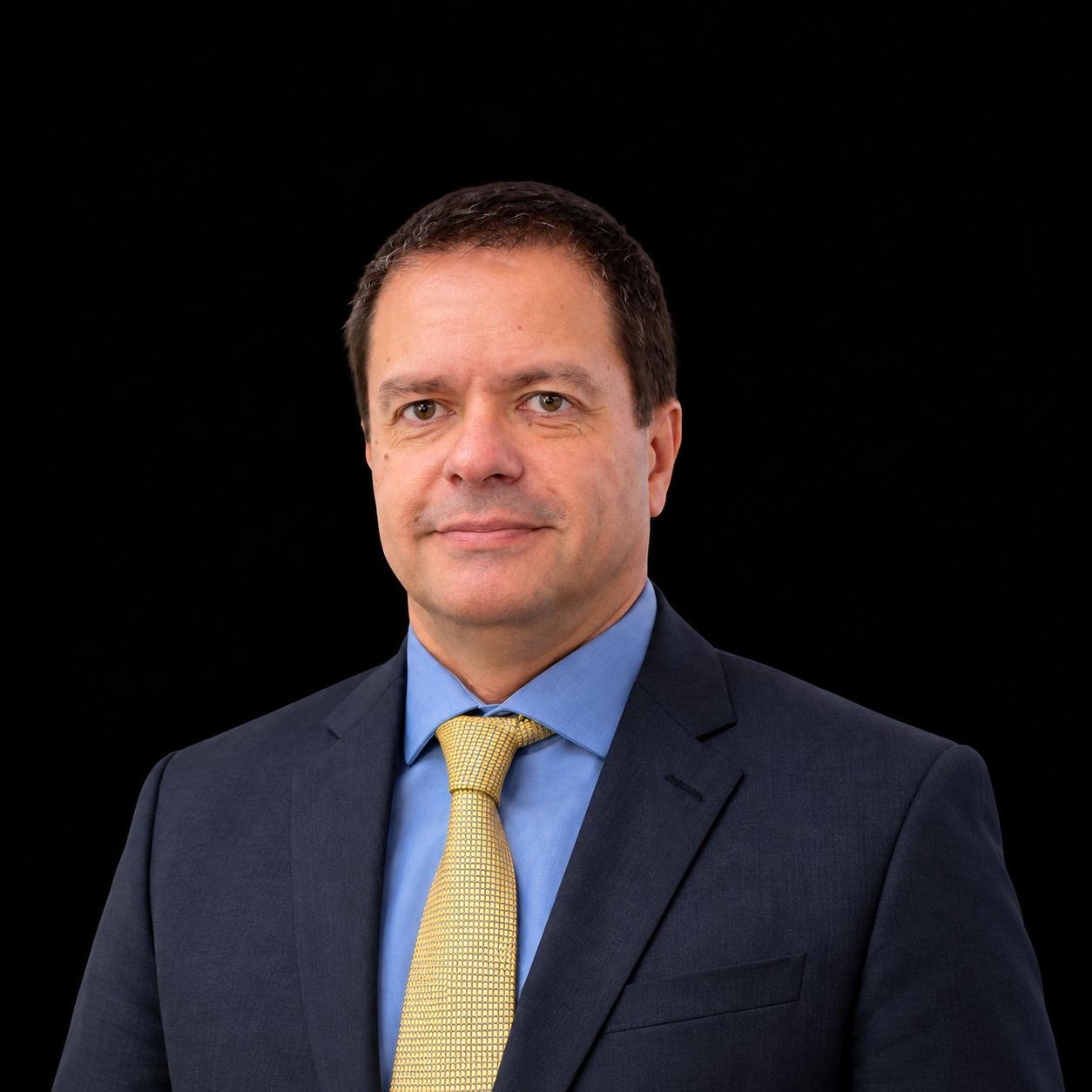
 São Paulo · Brazil

Submission received
Your information has been recorded by WONE.
Sourced guides to doing business in each market, and the status of every service there. Partners are in place in 34 markets so far.
One WONE Global Partner for each service in each market. Start from what you need to do, or go straight to a service.
Describe what you need. WONE Global names the service and the professional before any work begins.
Bring a requirement →Licences, value chains and the questions businesses in each industry ask first, with the services that usually apply.
What one country changes for the other, worked journeys step by step, and who handles each side.
When cross-border business becomes a dispute, UNIONE™, also part of the UNBOUNDED™ Global Ecosystem, prevents it, resolves it, arbitrates it and plans enforcement. 334 Fellows in 58 countries.
41 jurisdictions, each with primary sources and the date last checked.
Named senior professionals, each admitted as the one firm for a service in their country, and the firms they lead.
One Partner per service, per jurisdiction, admitted by review against published criteria.
Every statement is labelled: source-checked, professionally reviewed or not yet checked, with its source and date where checked.
Answers cite WONE Global's sourced statements and show how each one was checked. Research, not advice.
Accomplished regional specialists and international cross-border intelligence, across 100 countries, with one contact and one published Standard.
Service · Protect and resolve
Sanctions, anti-bribery, anti-money-laundering and checks on the companies you deal with. Led by a WONE Global Partner where one is named. Elsewhere, WONE Global confirms on request whether a vetted Associate firm can act.
Professional knowledge centre
Risk, compliance and financial integrity covers the laws that make a company answer for bribery, fraud, money laundering, sanctions breaches and abuses in its supply chain, and the reporting systems that let problems surface. For a group in several countries, the rules overlap and reach across borders: UK failure-to-prevent offences apply to foreign companies doing business in the UK, US sanctions follow US persons and US-origin goods, and EU due diligence rules apply to non-EU groups with EU turnover. Recent changes are significant: the UK failure to prevent fraud offence took effect on 1 September 2025, US FCPA enforcement priorities were reset in 2025, the EU postponed its due diligence directive to 2028, and the EU AML regulation will apply from July 2027.
Source-checked research100% of statements checked against a source60 checked against an official source0 checked against a secondary sourceChecked 2026-10-19Not yet professionally reviewed
Most of these laws work in the same way. They make the company liable for what employees, agents and subsidiaries do, and give it a defence, a lower penalty or a settlement if it had reasonable procedures, reported promptly and cooperated. A compliance programme is therefore a set of documented choices: a risk assessment, policies matched to the risks, controls on third parties, training, a reporting channel, investigation and self-reporting procedures, and periodic review.
For a founder, CFO or general counsel the practical questions are which entities fall within each law's thresholds, which offences can be committed by associated persons abroad, what must be registered or published, and what the group will do when a report or red flag arrives. The modules below compare the UK, US, Germany, France, India and the UAE, with international instruments where they matter, and flag what could not be confirmed on an official page.
Bribery of public officials is a crime almost everywhere, but the laws that shape group compliance are those that reach conduct abroad and make companies liable for people acting for them. The UK Bribery Act and India's Prevention of Corruption Act make a company liable when an associated person bribes, unless it had adequate procedures; the US FCPA reaches US persons, issuers and conduct in the US, with enforcement priorities reset in 2025; Germany and France add foreign-official offences and, in France, mandatory programmes for large companies.
Questions on this topic
10 statements on anti-bribery laws
Most companies meet anti-money laundering law in two ways: as customers of banks that must know who owns and controls them, and, in some sectors, as regulated businesses with their own due diligence and reporting duties. Every company should keep beneficial ownership information accurate and filed on time; businesses such as dealers in high-value goods, real estate agents and corporate service providers carry full obligations. The EU will move to a single directly applicable rulebook from July 2027, and the US has narrowed beneficial ownership reporting to foreign companies.
Questions on this topic
10 statements on anti-money laundering obligations for companies
Sanctions restrict dealings with listed people, entities and countries; export controls restrict where sensitive goods, software and technology may go. Each regime has its own reach: UK and EU sanctions bind persons in and nationals of those jurisdictions, US sanctions reach US persons and entities owned 50% or more by blocked persons, and UN listings must be implemented in the UAE within 24 hours. Groups need screening, ownership analysis and licensing processes that work across all of them.
Questions on this topic
10 statements on sanctions and export restrictions: the basics
Whistleblowing law has two parts: duties to provide reporting channels and respond, and protection for people who report. The EU directive led Germany and France to require internal channels for employers with 50 or more employees, with fixed response times and fines; the UK protects workers who make qualifying disclosures but does not require a channel; and the US pays whistle-blowers who report to regulators, which raises the stakes of handling internal reports well.
Questions on this topic
10 statements on whistleblowing rules
Companies are increasingly required to identify and act on human rights and environmental risks in their supply chains. Germany's Supply Chain Due Diligence Act applies from 1,000 German employees but is being softened; France's vigilance law applies to very large groups; the UK requires a modern slavery statement from £36 million turnover. At EU level, the corporate sustainability due diligence directive was postponed in 2025 to apply from 2028, and a forced labour product ban is coming. Mid-size groups usually meet these rules first as suppliers to larger customers.
Questions on this topic
10 statements on supply chain and human rights due diligence
Whether a company is criminally liable for its people's conduct depends on national law. The UK has moved fastest: a failure to prevent fraud offence for large organisations since 1 September 2025, a broader senior manager attribution rule since 29 June 2026, and older failure-to-prevent offences for bribery and tax evasion facilitation. Germany uses administrative fines instead of corporate criminal liability, France uses negotiated settlements, and the US Department of Justice rewards self-disclosure. Reasonable prevention procedures are the common thread.
Questions on this topic
10 statements on corporate criminal liability and failure to prevent fraud
Worked example, from official sources
Which compliance obligations apply by law to a mid-size group with operating companies in the UK, the US, Germany and the UAE, and which are driven by thresholds the group does or does not meet?
| Obligation | United Kingdom | United States (federal) | Germany | UAE (mainland) |
|---|---|---|---|---|
| Bribery | Section 7 failure to prevent applies to the whole group; adequate procedures defence | FCPA anti-bribery applies to the US subsidiary; accounting provisions do not (no US listing) | Bribery of foreign officials is an offence; corporate fines up to EUR 10 million | Not researched in this centre |
| Fraud and tax evasion | Large organisation (all three tests met): failure to prevent fraud; tax evasion facilitation offences | DOJ self-disclosure policy relevant to any misconduct found | Administrative fines as above | Not researched in this centre |
| Whistle-blowing | Workers protected; no statutory channel duty identified | SEC and DOJ award programmes create external reporting incentives | Channel required (150 employees); acknowledge in 7 days, feedback in 3 months | Not researched in this centre |
| Supply chain | Modern slavery statement required (£80m is above £36m) | Forced labour tariff measures on certain economies | LkSG not applicable (150 is below 1,000); CSDDD thresholds not met (600 employees) | None identified |
| Beneficial ownership | Covered in the UK market guide | Delaware subsidiary exempt from BOI reporting | Report beneficial owners to the Transparency Register | Keep register; file changes within 15 days |
| Sanctions and export controls | OFSI and OTSI licences; dual-use export licences for listed items | OFAC 50% rule; EAR on US-origin items | EU dual-use authorisation; EU sanctions via national authorities | Freeze funds of UN-listed persons within 24 hours |
Result on these facts
On these facts the group needs one programme with local modules. The legal minimums are a UK anti-bribery, anti-fraud and tax evasion prevention framework applied group-wide (including to Gulf agents), a UK modern slavery statement, a German whistle-blowing channel meeting the seven-day and three-month rules, beneficial ownership filings in Germany and the UAE, and sanctions and export control screening that covers UK, EU, US and UN lists and the OFAC 50 percent rule. The group is below the German supply chain law and EU due diligence directive thresholds, but should expect larger customers to impose similar requirements by contract. UAE anti-bribery and whistle-blowing rules were not covered and should be confirmed locally.
Confirm the UK large organisation test under the parent and group rules, the export control classification of each product, whether any group company has become an obliged entity under AML law, the enactment status of the German LkSG amendment, and any later amendment to the EU due diligence directive thresholds. UAE anti-bribery and whistle-blowing obligations need local advice.
Each statement is numbered to the source it was checked against. We use official sources where we can, and each statement says whether it was checked against an official or a secondary source. Sources last checked on 19 October 2026. None of it has been professionally reviewed yet: it is research checked against official and secondary sources by WONE Global, not legal or tax advice.
A commercial organisation commits an offence if a person associated with it bribes another person to obtain or retain business or a business advantage for it, unless it proves it had adequate procedures designed to prevent such conduct. Applies to UK-incorporated bodies and partnerships wherever they do business, and to any other body or partnership that carries on a business, or part of a business, in the UK.
The FCPA anti-bribery provisions make it unlawful to corruptly offer, pay, promise or authorise anything of value to a foreign official to obtain or retain business, and apply to all US persons and certain foreign issuers of securities and, since 1998, to foreign firms and persons who cause an act in furtherance of a corrupt payment within US territory. Federal. The Foreign Extortion Prevention Act of July 2024 separately makes it a crime for a foreign official to demand or accept such payments from issuers, domestic concerns and others, with up to 15 years' imprisonment.
The FCPA accounting provisions require companies whose securities are listed in the United States to keep books and records that accurately and fairly reflect their transactions and to maintain adequate internal accounting controls. Federal; applies to issuers. The Securities and Exchange Commission has civil enforcement authority under the FCPA.
German bribery offences extend to bribery of foreign public officials, employees of international organisations and members of foreign and international courts. Applies §§ 331–334 StGB as specified in § 335a StGB.
Germany has no corporate criminal liability as such, but a company can be fined up to EUR 10 million for an intentional criminal offence, and up to EUR 5 million for a negligent one, committed by its management in connection with the business. Administrative offence fines under § 30 OWiG; where a statute refers to § 30, the maximum for the relevant regulatory offence can be multiplied by ten.
The § 30 page confirms the fine caps; the statement that Germany has no corporate criminal liability is general background and is not stated on that page.
The offence of failure to prevent fraud came into force on 1 September 2025: a large organisation is liable where an employee, agent, subsidiary or other person performing services for it commits a listed fraud offence intending to benefit it. Applies to bodies corporate and partnerships wherever incorporated. Not liable where the organisation was the intended victim. Fine, unlimited on indictment.
An organisation is a large organisation for the failure to prevent fraud offence if, in the financial year before the fraud, it met two or more of: turnover above £36 million, balance sheet total above £18 million, and more than 250 employees. Separate rules in sections 201 and 202 apply to parent undertakings and groups.
A relevant body commits an offence under the Criminal Finances Act 2017 if a person associated with it criminally facilitates UK tax evasion, unless it proves it had reasonable prevention procedures or that it was not reasonable to expect any; the penalty is a fine. Section 45; applies whatever the size of the body. Unlimited fine on indictment.
Under the Department of Justice's department-wide Corporate Enforcement and Voluntary Self-Disclosure Policy, the Department will decline to prosecute a company that voluntarily self-discloses, fully cooperates, remediates in a timely and appropriate way and has no aggravating circumstances, but the company must pay all disgorgement or forfeiture and restitution. Federal; all corporate criminal matters handled by the Department except antitrust violations under 15 USC 1-38. Declinations are made public.
The 10 March 2026 date comes from the link label on the Criminal Division corporate enforcement page; the policy document itself shows no date.
In the UK a worker's disclosure is protected if the worker reasonably believes it is in the public interest and shows a criminal offence, a breach of a legal obligation, a miscarriage of justice, danger to health or safety, damage to the environment, sexual harassment, or deliberate concealment of any of these. Public Interest Disclosure Act 1998 provisions in the Employment Rights Act 1996. Disclosures are protected when made to the employer, a legal adviser or a prescribed person such as a regulator, and to others such as the media only in limited circumstances.
Page metadata shows last updated 16 October 2026.
The SEC whistleblower programme pays awards of 10% to 30% of the money collected in SEC enforcement actions with over USD 1 million in sanctions to individuals who voluntarily provide high-quality original information, and the SEC can take action against employers that retaliate. Federal; Dodd-Frank Act. Award applications are due within 90 calendar days of a Notice of Covered Action.
The Department of Justice Corporate Whistleblower Awards Pilot Program pays eligible whistleblowers a share of forfeited assets for original information on corporate misconduct in areas including foreign corruption, sanctions violations, and trade, tariff and customs fraud; a company that self-reports within 120 days of an internal whistleblower report, and before the Department contacts it, may still qualify for a declination. Federal; Department of Justice Criminal Division. Awards are discretionary. Programme guidance was updated in July 2026.
Employers that generally have at least 50 employees must set up and operate at least one internal whistle-blowing channel under the Whistleblower Protection Act (HinSchG). Certain financial and investment firms are covered regardless of headcount (§ 12(3)). Employers with 50–249 employees may share a channel (§ 14(2)); their transitional period ended on 17 December 2023.
A German internal reporting office must confirm receipt of a report to the whistle-blower within seven days and give feedback on planned and completed follow-up within three months of that confirmation. HinSchG section 17(1) and (2). Where no confirmation was sent, the three months run from three months and seven days after receipt. Anonymous reports should also be processed (section 16(1)), though channels need not be designed for anonymous reports.
A commercial organisation that supplies goods or services, carries on all or part of its business in the UK and has annual turnover of £36 million or more must publish an annual modern slavery statement. Turnover includes subsidiaries and excludes VAT and trade discounts. Adding the statement to the government registry is encouraged but not required.
A presidential memorandum of 23 July 2026 directs the US Trade Representative to impose Section 301 tariffs on all goods of 60 economies found to have failed to prohibit imports made with forced labour, at 10 percent or 12.5 percent, or on a net-of-MFN basis for the EU, Taiwan, Japan, Korea and Switzerland. Federal. Products listed in an annex are exempt; tariff-rate quotas are to be set for certain textiles and apparel from Bangladesh, Cambodia, Indonesia and Malaysia. No end date is set and USTR may modify or terminate the tariffs.
Read on the FederalRegister.gov web edition, which describes itself as unofficial; the official text is the Federal Register PDF on govinfo.gov. The effective date of the tariffs and the annex of exempt products (published as images) could not yet be checked. USTR's Section 301 page also lists other 2026 investigations, including structural excess capacity in manufacturing (initiated 11 March 2026).
The Supply Chain Due Diligence Act (LkSG) applies to companies with their head office, principal place of business or registered seat in Germany, or a German branch, that generally employ at least 1,000 employees in Germany. Threshold applies from 1 January 2024 (previously 3,000). Group companies' German employees count towards the parent's headcount; agency workers count after six months.
Directive (EU) 2024/1760 on corporate sustainability due diligence, as adopted on 13 June 2024 and in force from 25 July 2024, covers EU companies with more than 1,000 employees on average and net worldwide turnover above EUR 450 million, and non-EU companies with net turnover in the EU of at least EUR 450 million. Thresholds must be met in each of the last two consecutive financial years (EU companies) or the financial year before the last (non-EU companies); there is no employee threshold for non-EU companies. Thresholds as stated in recitals 27 to 30 of the original text.
Read from the original Official Journal text, not a consolidated version. Later amendments to scope or obligations under the EU omnibus simplification package, if adopted, were not confirmed.
FinCEN's final beneficial ownership information (BOI) rule, effective 14 August 2026, permanently exempts US companies from BOI reporting and removes the need to report US persons as beneficial owners. Federal rule under the Corporate Transparency Act. Applies nationwide; makes permanent the exemptions first introduced by the interim final rule of 26 March 2025.
Final rule published in the Federal Register on 14 August 2026 (document 2026-16576); the Federal Register page was seen in search results but not yet checked.
Legal entities under private law and registered partnerships must obtain, keep up to date and report details of their beneficial owners electronically to the registry authority for the Transparency Register without delay. Applies to German companies (including GmbH and UG) and registered partnerships; certain foreign entities are also covered (see de-regulatory-003).
§ 20 Abs. 2 as displayed contains no notification fiction (Mitteilungsfiktion); an active report is required.
Companies must keep a register of beneficial owners and submit any change in beneficial ownership information to the registrar within 15 days of the change. Entities covered by Cabinet Resolution No. 109 of 2023. Administrative penalties for breaches are set by Cabinet Resolution No. 132 of 2023 (not reviewed here).
UK financial sanctions licences are issued by the Office of Financial Sanctions Implementation (OFSI), and trade sanctions licences by the Office of Trade Sanctions Implementation (OTSI) or the Export Control Joint Unit; without an exception, any prohibited activity needs a licence. Transfers of funds to or through a designated person can engage both financial and trade sanctions.
A licence is needed to export dual-use items listed on the UK Strategic Export Control Lists from Great Britain; in Northern Ireland the EU Dual-Use Regulation (EU) 2021/821 applies instead. Licences include standard individual export licences and open general licences registered through SPIRE; the Export Control Joint Unit handles strategic export licensing queries. Moving controlled dual-use items from Northern Ireland to the EU or Great Britain needs no licence.
Under OFAC's 50 percent rule, entities owned 50 percent or more in the aggregate, directly or indirectly, by one or more blocked persons are themselves treated as blocked, even if not named on the sanctions list. Federal; OFAC programmes. Indirect ownership through other entities counts. Control without majority ownership is not captured by the rule but can still create risk.
Only the question text and opening of FAQ 401 were visible on the index page; the full FAQ page could not yet be checked. The point on control is general knowledge, not from the page.
Items subject to the Export Administration Regulations include all items in the United States, all US-origin items wherever located, certain foreign-made items incorporating controlled US-origin content above de minimis levels and certain foreign-produced direct products, and items subject to the EAR but not listed on the Commerce Control List are designated EAR99. Federal, 15 CFR 734.3(a) and (c), administered by the Bureau of Industry and Security. Whether a licence is needed depends on the item's classification, destination, end user and end use. Defence articles under ITAR are outside this claim.
The eCFR is an authoritative but unofficial editorial compilation; the official text is the annual CFR edition and Federal Register.
An authorisation is required to export dual-use items listed in Annex I to Regulation (EU) 2021/821. Dual-use items listed in Annex I.
Any person in the UAE must freeze, without prior notice, funds owned or controlled by persons on the UN Sanctions List or the UAE Local Terrorist List within 24 hours of the listing decision. Applies to all persons in the UAE; financial institutions and designated non-financial businesses must also screen records and transactions (Article 21).
It is a defence to the failure to prevent fraud offence for the organisation to prove that it had reasonable fraud prevention procedures in place, or that it was not reasonable to expect it to have any.
WONE Global Intelligence
Ask in your own words. Answers come from WONE Global's checked records, with every source shown, and end with the named Partner who can act. Go deeper on any point, or build a decision file.
Scope
Key questions
You don’t need the answers before you talk to us. Working through them is the first thing we do together.
Coverage
A named WONE Global lead in 7 markets today. In every other featured market, WONE Global arranges qualified local expertise on request and tells you who it is before work begins.
 BrazilLed by Luis Felipe Balieiro Lima
 CameroonLed by Kelvin A. Egbe
 ChinaLed by Roberto Gilardino
 ItalyLed by Stefano Modena
 LuxembourgLed by Bruno Abbate
 Saudi ArabiaLed by Abdulrahim bin Saleh Al-Zahrani
 United Arab EmiratesLed by Priju Dominic
WONE Global Partners
Each is responsible for this service in their own jurisdiction, under their own professional rules.
São Paulo · Brazil Yaoundé · Cameroon
WONE Global Partner · Cameroon
<span aria-hidden="true">Attorney specialized in structuring, licensing, control, project permitting, patents, trademarks & Designs registration, venture financing, trade finance, regulatory intelligence & compliance, F…
 Shanghai · China
WONE Global Partner · China
Roberto Gilardino is Regional Partner at Horizons, supervising the advisory’s activities in North Asia as well as additional countries (including Mongolia, Malaysia, Indonesia, Pakistan, UAE, Cyprus and Malta).
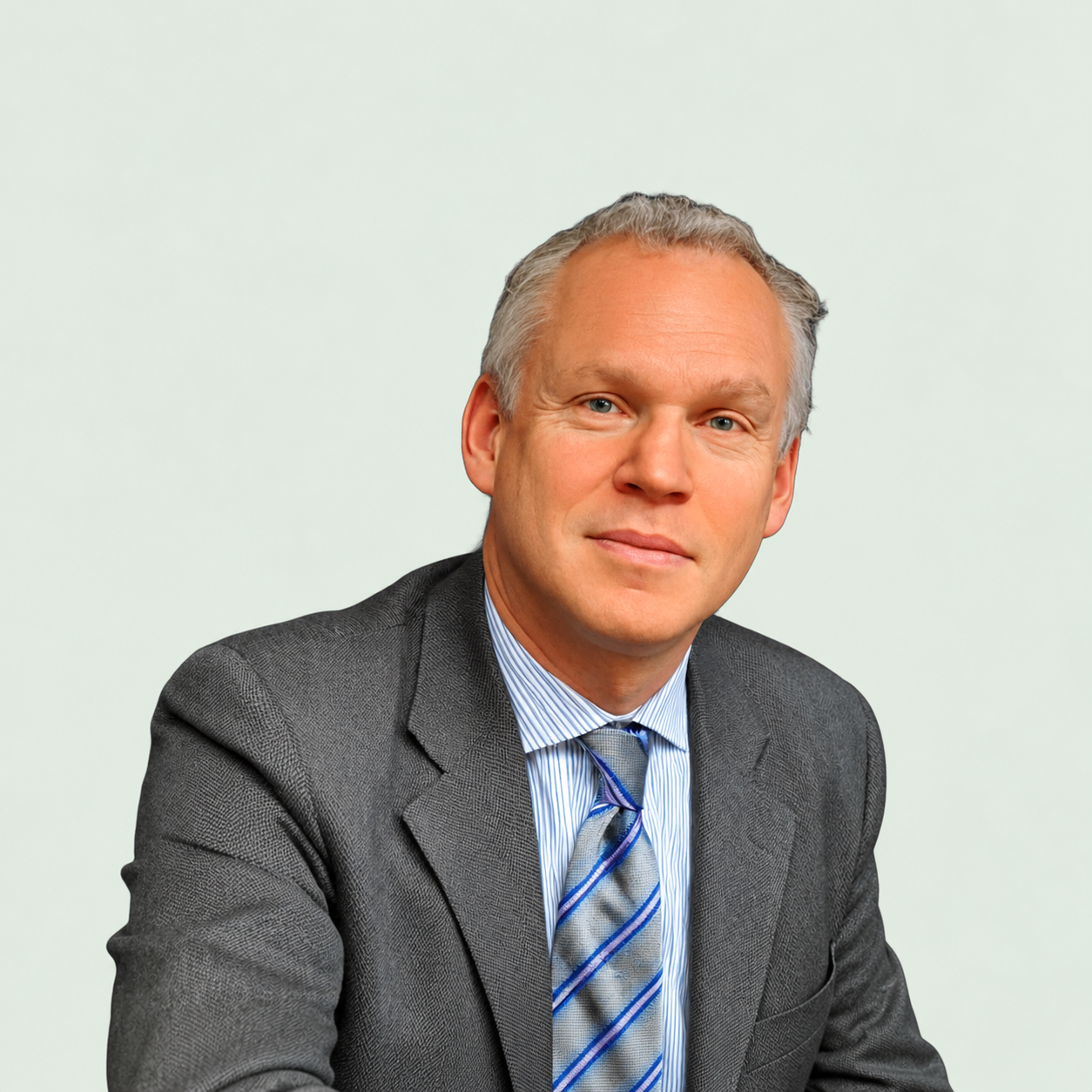 Milan · Italy
WONE Global Partner · Italy
 Luxembourg · Luxembourg
WONE Global Partner · Luxembourg
 Jeddah · Saudi Arabia
 Dubai · United Arab Emirates
WONE Global Partner · United Arab Emirates
Who does what
WONE Global is not a law, tax or audit firm. Each firm is independent and regulated where it practises.
Cases
The cases this service leads or joins, in the words clients use. Each sets out what is at stake, how WONE Global handles it and who handles it in each market.
Every case involving Risk, Compliance & Financial Integrity →
Contact WONE Global
Save your questions, decisions and WONE activity in one account.
Forgot your password? Reset it securely.
Partner workspaces are for Partner firms. Explore partnership →