










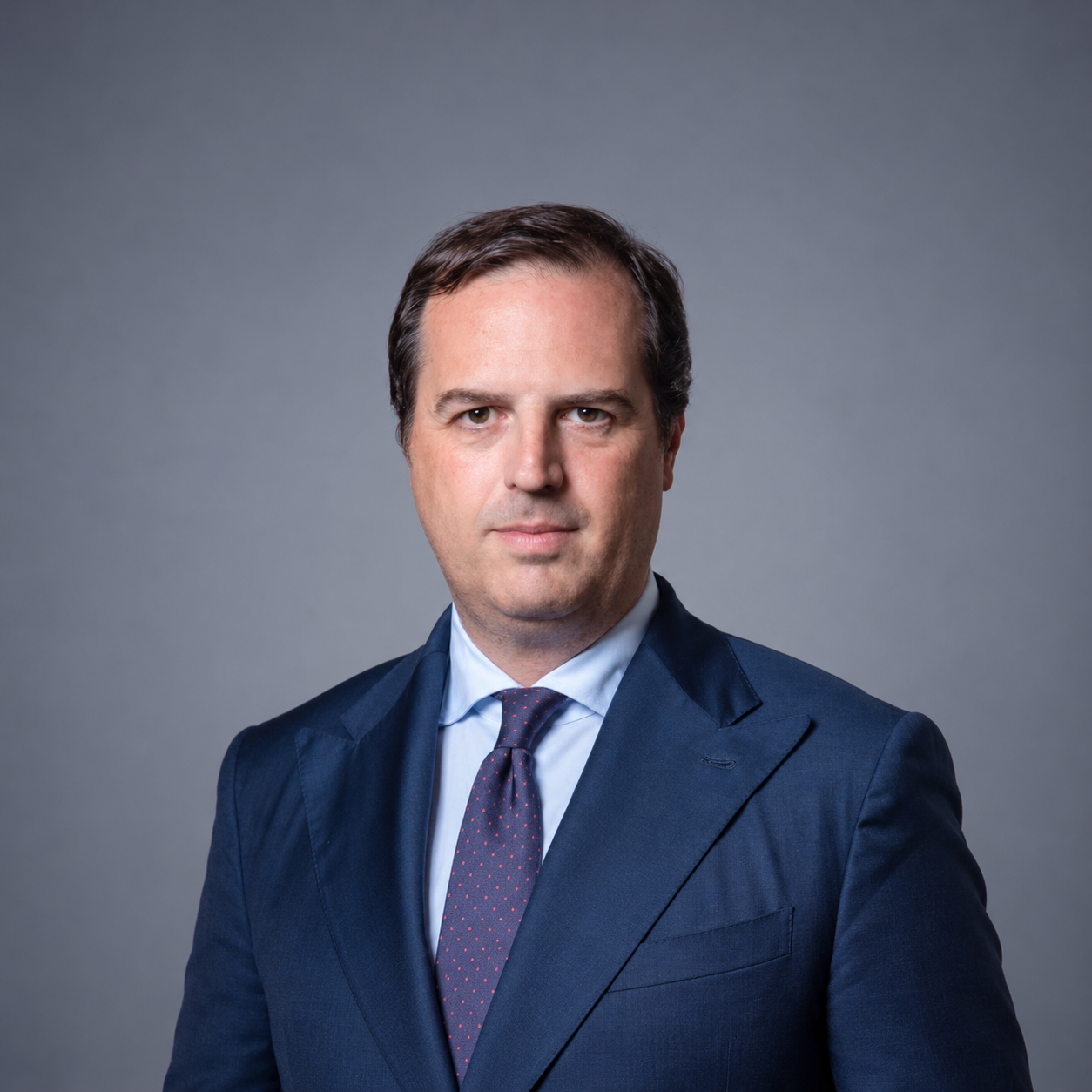
 Rome · Italy
WONE Global Capability Partner · Italy
Sourced guides to doing business in each market, and the status of every service there. Partners are in place in 32 markets so far.
One WONE Global Partner for each service in each market. Start from what you need to do, or go straight to a service.
Licences, value chains and the questions businesses in each industry ask first, with the services that usually apply.
Ask WONE Global what applies to your industry in a market, with the sources shown.
What one country changes for the other, worked journeys step by step, and who handles each side.
Named senior professionals, each admitted as the one firm for a service in their country, and the firms they lead.
One Partner per service, per jurisdiction, admitted by review against published criteria.
Every statement is labelled: source-checked, professionally reviewed or not yet checked, with its source and date where checked.
Answers come from statements checked against official sources, with the sources shown. Research, not advice.
Accomplished regional specialists and international cross-border intelligence, across 100 countries, with one contact and one published Standard.
Western Europe · WONE Global market
Italy is covered by WONE for cross-border business discovery, with links to relevant expertise, professionals, industries and market intelligence. 3 of 18 services have a WONE Global Partner here. For the others, WONE Global confirms availability on request.
Rome · Friday 23 October
04:58
Local time
Market guide · Source-checked research
Italy is an EU member state with a civil law system, where most foreign investors operate through an S.r.l., which can be formed online with EUR 1 capital. Companies pay IRES at 24 percent plus regional IRAP, and VAT is 22 percent with mandatory e-invoicing through SdI. Acquisitions in strategic sectors are subject to the golden power regime, and mergers above EUR 595 million combined Italian turnover need AGCM clearance. Pay is set mainly by sector collective agreements, as there is no statutory minimum wage.
Essentials guide · Source-checked research100% of statements checked against a source44 checked against an official source7 checked against a secondary sourceChecked 2026-10-19Not yet professionally reviewed
Italian company law is codified in the Civil Code, with notaries handling incorporation and filings and companies coming into existence on entry in the Business Register. Tax is administered nationally (IRES, VAT) with a regional production tax (IRAP). Key authorities include Banca d'Italia for banking supervision, the AGCM for competition, the Garante for data protection, ANAC for whistleblowing and anti-corruption, and ACN for cybersecurity. As an EU member, Italy applies EU customs, data protection and sanctions law.
Key facts
Foreign investors usually choose a limited liability company (S.r.l.) or a joint stock company (S.p.A.), both formed through a notary and registered in the Business Register. Capital requirements are low for an S.r.l. and higher for an S.p.A., and formation can be completed online.
Key facts
An S.r.l. can be formed with share capital of EUR 1, which makes it the usual vehicle for a subsidiary; at least 25 percent must be paid in once capital reaches EUR 10,000.
An S.p.A. needs EUR 50,000 minimum capital and is the required form for a listing.
A notary drafts and files the deed, and the company exists only once entered in the Business Register, so plan banking and contracting around the registration date.
Incorporation of an S.r.l. can be done fully online before a notary, which helps foreign shareholders who cannot travel.
Company forms are open to EU and non-EU nationals, but strategic sectors are subject to golden power screening.
Who handles this in ItalySetting up and running a companyContracts and commercial law
Questions on this topic
5 statements on entry, investment and company formation in Italy
Companies pay IRES at 24 percent and regional IRAP, generally at 3.9 percent. VAT is 22 percent with structured e-invoicing through SdI for domestic transactions. Tax figures here come from a secondary source because the tax authority pages could not be retrieved.
Key facts
Budget for IRES at 24 percent plus regional IRAP at a standard 3.9 percent.
Standard VAT is 22 percent, and invoices between persons resident or established in Italy must go through the SdI exchange system.
Outbound dividends and interest bear 26 percent withholding and royalties 30 percent on 75 percent of the gross, unless a treaty or EU directive exemption applies; EU directive relief needs a 10 percent (dividends) or 25 percent (interest and royalties) holding for one year.
Transfer pricing documentation must be ready to hand over within 20 days of a request.
The CFC test has been aligned with Pillar Two from FY 2024; check the separate minimum tax rules for large groups.
Who handles this in ItalyTax and structuring · Alessandro DagninoAccounting and annual filings · Gianluigi Mollica
Questions on this topic
6 statements on tax, accounting and reporting in Italy
Italian pay is set mainly by sector collective agreements rather than a statutory minimum wage. Severance (TFR) accrues for every employee, and non-EU hiring runs through annual quotas.
Key facts
There is no statutory minimum wage; the applicable collective agreement sets minimum pay by level.
Budget for thirteen (sometimes fourteen) monthly payments and TFR accrual of 1/13.5 of annual pay.
Overtime is capped at 8 hours a week and 250 hours a year.
Trial periods are 3 or 6 months by statute, often varied by collective agreements.
Recruiting non-EU staff from abroad depends on the annual quota decree and authorisation from the Immigration Single Desk.
Who handles this in ItalyEmployment, payroll and immigration
Questions on this topic
6 statements on employment, payroll and mobility in Italy
Banking and financial activities need authorisation from Banca d'Italia, and strategic assets are subject to the golden power regime. Several national incentive schemes, mainly managed by Invitalia, support large or regional investments.
Key facts
Banks and financial intermediaries need Banca d'Italia authorisation; significant banks are supervised within the SSM.
Golden power special powers apply to companies holding strategic assets, beginning with energy, transport and communications.
Development Contracts support projects of EUR 20 million or more with grants and soft loans.
Law 181/89 incentives cover industrial crisis areas, with a fast track for strategic foreign investments of EUR 10 million or more.
Who handles this in ItalyLicences, permits and regulators
Questions on this topic
4 statements on licensing, incentives and sector rules in Italy
Banks are supervised by Banca d'Italia within the European Single Supervisory Mechanism. Banks and other obliged entities report suspicious transactions to the UIF, so expect thorough know-your-customer checks when opening accounts.
Key facts
Account opening is subject to AML checks under Legislative Decree 231/2007; obliged entities report suspicious transactions to the UIF.
Bank supervision is shared with the ECB through the SSM.
Payments must respect EU sanctions, which national authorities implement.
Who handles this in ItalyBanking and capitalPayments and currencyAnti-bribery, sanctions and compliance
Questions on this topic
3 statements on banking, payments and capital movement in Italy
Italy applies EU customs law under the Union Customs Code. Importers and exporters need an EORI number, and exports of listed dual-use items need an authorisation.
Key facts
Customs law is the EU Union Customs Code, so tariffs and procedures follow EU rules.
Obtain an EORI number from the Italian customs authority before the first customs operation.
Check products against Annex I to the EU Dual-Use Regulation before export.
Who handles this in ItalyCustoms, trade and export controls
Questions on this topic
3 statements on customs, trade and supply chain in Italy
The GDPR applies, supplemented by the Personal Data Protection Code, and the Garante is the supervisory authority. Italy has transposed NIS2, with ACN as the national cybersecurity agency.
Key facts
GDPR obligations apply in full, with national rules in Legislative Decree 196/2003 as amended in 2018.
Transfers outside the EU are simplest to adequacy countries, including certified US companies under the Data Privacy Framework.
Medium and large entities in NIS2 sectors must manage cyber risk and report significant incidents; ACN is the single point of contact.
E-invoicing through SdI is also a systems obligation for domestic businesses.
Who handles this in ItalyData protection and cyber
Questions on this topic
6 statements on data protection, cyber and digital compliance in Italy
Italy is party to the main WIPO treaties, so trademarks, patents and designs can be extended to Italy through the Madrid, PCT and Hague systems. A Patent Box offers an enhanced deduction for qualifying R&D.
Key facts
International trademark registrations can designate Italy under the Madrid Protocol, in force since 2000.
PCT applications can enter the Italian national phase; Italy has been a PCT state since 1985.
Copyright is protected under the Berne Convention without registration formalities.
The Patent Box gives an extra 110 percent deduction on qualifying R&D for patents, software and designs.
Who handles this in ItalyTrade marks, patents and brands
Questions on this topic
4 statements on intellectual property in Italy
Mergers above the AGCM turnover thresholds need prior notification, and the AGCM can call in some smaller deals. Acquisitions involving strategic assets may also need golden power clearance, and insolvency is governed by the 2019 Crisis Code.
Key facts
Notify the AGCM before closing where combined Italian turnover exceeds EUR 595 million and two parties each exceed EUR 36 million (2026 thresholds).
The AGCM may call in below-threshold deals within six months of completion in defined cases.
Golden power review runs alongside merger control, with a 45-day decision period.
EU rules on investment screening are being revised; formal adoption was pending at the time of research.
Restructuring and insolvency follow the Code of Business Crisis and Insolvency, in force since July 2022.
Who handles this in ItalyBuying, selling and investing · Francesco Mangiameli
Questions on this topic
6 statements on deals, merger control and restructuring in Italy
Companies can be held liable for certain offences under Legislative Decree 231/2001, and many adopt organisation models to manage that risk. Whistleblowing channels are mandatory for larger and certain sector entities, and AML rules apply to obliged entities.
Key facts
Corporate liability for offences is set by Legislative Decree 231/2001.
Entities with 50 or more employees, entities in sensitive sectors and entities with a 231 model must run internal whistleblowing channels.
ANAC can fine EUR 10,000 to EUR 50,000 for retaliation or failure to set up channels.
AML obligations sit in Legislative Decree 231/2007, with reporting to the UIF.
Who handles this in ItalyAnti-bribery, sanctions and compliance
Questions on this topic
4 statements on compliance, integrity and governance in Italy
Italy is a New York Convention state and recognises EU judgments under Brussels I bis without special procedure. Mediation is a precondition to court action in several commercial areas.
Key facts
Foreign arbitral awards are enforced under the New York Convention, in force for Italy since 1969.
EU member state judgments are recognised and enforceable in Italy without a declaration of enforceability.
Before suing in listed matters, such as leases, insurance or banking contracts, parties must try mediation.
Who handles this in ItalyDisputes and arbitration
Questions on this topic
4 statements on disputes and enforcement in Italy
Sources last checked on 19 October 2026. None of it has been professionally reviewed yet: it is research checked against official and secondary sources by WONE Global, not legal or tax advice.
WONE Global Intelligence
Ask in your own words. Answers come from WONE Global's checked records, with every source shown, and end with the named Partner who can act. Go deeper on any point, or build a decision file.
WONE Global Partners
3 of 18 services have a WONE Global Partner in Italy. For the other 15, WONE Global confirms whether a vetted Associate firm can act and tells you who it is before any work starts.
WONE Global Partners
Senior professionals responsible for WONE Global work in Italy, under their own professional rules.
Rome · ItalyWONE Global Capability Partner · Italy
 Milan · Italy
WONE Global Capability Partner · Italy
MAIN PROFESSIONAL EXPERIENCE National and international tax law advisory to multinational groups. Professionally born with Arthur Andersen, areas of expertise include M&A, tax litigation and auditing.
 Milan · Italy
WONE Global Capability Partner · Italy
 Turin · Italy
WONE Global Capability Partner · Italy
Lucia Myriam Netti is the Regional Partner at Horizons, overseeing the advisory’s activities in the EMEA region, Russia and Belarus. In her multi-faceted role with the advisory, Lucia adeptly serves companies in develop…
 Milan · Italy
What changed recently
From the Newsroom: changes recorded in this guide, each checked against its official source, with the date it takes effect.
Save your questions, decisions and WONE activity in one account.
Forgot your password? Reset it securely.
Partner workspaces are for Partner firms. Explore partnership →
